

Sludge dehydrant is a chemical agent used in sewage treatment plants, mainly used to separate the water in the sludge from the solid, and improve the solid content of the sludge. The selection of suitable sludge dehydrant to improve the filtration efficiency, need to consider a number of factors, the following are some specific recommendations:
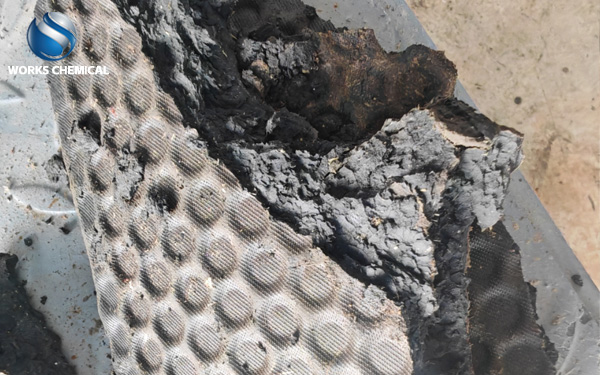
First, understanding the properties of sludge
Sludge type: According to the main components of the sludge, the sludge can be divided into inorganic sludge and organic sludge. Different sludge properties require the use of different sludge dewatering agents. In general, cationic polyacrylamide (PAM) is used to treat organic sludge and anionic PAM is used to treat inorganic sludge.
Sludge moisture content: the sludge with high moisture content is easy to form a filter cake layer during the filtration process, which prevents water discharge and reduces the dehydration efficiency. Therefore, it is necessary to select dehydrating agents that can effectively reduce the moisture content of sludge.
Sludge viscosity: the sludge with high viscosity will also affect the dehydration efficiency, and it is necessary to choose a dehydrating agent that can reduce the viscosity of the sludge.
Two, determine the dehydration requirements
Solid content requirements: According to the solid content requirements of the treated sludge, select the appropriate sludge dehydrating agent.
Treatment time: Considering the time required for the dehydration process, choose a sludge dehydrator that can shorten the treatment time.
Treatment efficiency: Select sludge dewatering agents that can improve the overall dewatering efficiency to reduce treatment costs.
Three, consider the scale of processing
Different treatment scales require different doses of sludge dehydrant. In the treatment of large-scale sludge, it is necessary to choose a sludge dewatering agent that can run stably and efficiently, and ensure its economy and feasibility.
4. Select product model and manufacturer
Product model: According to the nature of sludge and dehydration requirements, the suitable model of sludge dehydrating agent is screened through experiments. For example, the dehydration effect of cationic PAM with different ionic degrees can be compared by small experiments to select the best model.
Manufacturer reputation: Choose a good reputation and reputation of sludge dehydrating agent manufacturers to ensure product quality and after-sales service.
Five, optimize the conditions of use
Dissolution and mixing: ensure that the sludge dehydrating agent can be fully dissolved and mixed with the sludge evenly. The mixing effect can be optimized by adjusting the dissolution concentration, stirring speed and other conditions.
Operating parameters: In the actual operation process, the operating parameters, such as filtration pressure and filtration time, should be flexibly adjusted according to the sludge properties and equipment conditions to achieve the best dehydration effect.
Six, consider cost effectiveness
Different models and dosages of sludge dehydrants will have different costs. In the selection, it is necessary to consider the cost effectiveness comprehensively and choose the cost-effective sludge dewatering agent.
In summary, the selection of the appropriate sludge dehydrant to improve the filtration efficiency requires comprehensive consideration of sludge properties, dehydration requirements, treatment scale, product model and manufacturer, as well as cost effectiveness and other factors. The dewatering efficiency and treatment effect of sludge can be significantly improved by scientific and reasonable selection and use of sludge dewatering agent.