

In the field of sludge treatment, how to efficiently increase the sludge feed rate and reduce the moisture content of the sludge cake has always been the focus of the industry. The emergence of sludge enhancers has provided an effective solution to this problem.
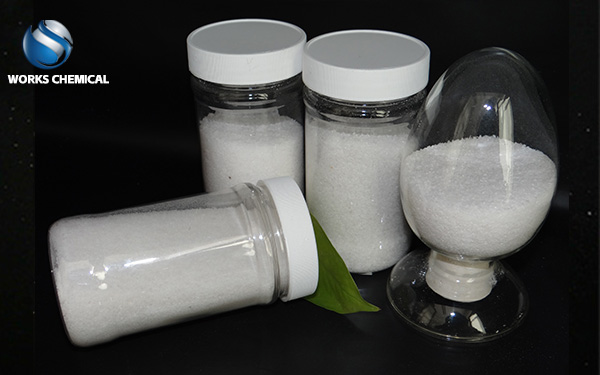
Challenges faced in sludge treatment
The traditional sludge treatment methods have many limitations in terms of the sludge feeding speed and the control of the moisture content of the sludge cake. Slow sludge feeding speed will lead to low treatment efficiency, increase treatment time and cost. If the moisture content of the mud cake is too high, it will not only increase the difficulty and cost of subsequent disposal, but also may cause secondary pollution to the environment. For instance, during the plate and frame filter press process, if the sludge feeding speed is uneven or too slow, it will lead to an extended filter press cycle and a decrease in equipment utilization rate. If the moisture content of the mud cake is too high, it will make the mud cake difficult to transport and store, and even cause problems such as leachate leakage during stacking.
The principle by which sludge enhancers increase the sludge feeding speed
Sludge enhancers increase the sludge feeding rate by improving the physical and chemical properties of sludge. On the one hand, it can adjust the particle structure of sludge, making the sludge particles more uniform and compact, and reducing the resistance of sludge during the transportation process. For instance, certain sludge enhancers can cause the fine particles in the sludge to coagulate into larger ones, reducing the viscosity of the sludge. This enables the sludge to flow more smoothly in the pipeline and enhances the conveying efficiency of the sludge feed pump. On the other hand, sludge enhancers can optimize the dewatering performance of sludge, ensuring that the sludge has a certain dewatering effect before entering the treatment equipment, reducing the dewatering time within the equipment and indirectly increasing the sludge feeding speed.
The mechanism by which sludge enhancers reduce the moisture content of sludge cakes
Reducing the moisture content of the sludge cake is one of the key goals in sludge treatment. Sludge enhancers play a significant role in this regard. It can disrupt the bound state of water in sludge and convert bound water into free water. The water in sludge usually exists in two forms: bound water and free water. Bound water is closely bound to sludge particles and is difficult to remove. The chemical components in the sludge enhancer can interact with the charges on the surface of sludge particles, altering the surface properties of the sludge particles, weakening the binding force between water and sludge particles, and releasing the bound water to become free water. Free water is more easily removed in dewatering equipment, thereby reducing the moisture content of the mud cake. In addition, sludge enhancers can also promote the formation of water discharge channels in sludge. During dewatering processes such as pressure filtration, water can be discharged more quickly and thoroughly, further enhancing the dewatering effect.
Sludge enhancers have significant advantages in increasing the sludge feeding speed and reducing the moisture content of sludge cakes. By improving the physical and chemical properties of sludge and optimizing the dewatering process, it provides an efficient and environmentally friendly solution for the sludge treatment industry. With the continuous improvement of environmental protection requirements and the continuous progress of sludge treatment technology, the application prospects of sludge efficiency enhancers will be even broader.