

In the field of sewage treatment and sludge resource utilization, the plate and frame filter press, as a core dewatering equipment, its dewatering effect directly affects the subsequent disposal cost and efficiency. However, many enterprises are confronted with problems such as thin and unformed mud, and the root cause often lies in the improper selection of chemicals. The editor will delve into the application of sludge enhancers in plate and frame filter presses, revealing how they achieve deep dewatering and resource utilization of sludge through scientific proportioning and action mechanisms.
I. The root cause of thin mud compaction: Misunderstandings in the selection of chemicals
Among the common reasons for the thin sludge produced by plate and frame filter presses, improper selection of chemicals accounts for more than 60%. Although traditional agents such as lime and iron salts can reduce moisture content, they have three major drawbacks:
Youdaoplaceholder0 Corrosion of equipment : Acidic inorganic salts accelerate the aging of filter cloth and equipment, shortening their service life;
Youdaoplaceholder0 clogging of filter cloth : Residual high-molecular flocculants cause clogging of the filter cloth pores, increasing the frequency of cleaning;
Youdaoplaceholder0 Increase the amount of dry sludge : Excessive addition of inorganic salts leads to a decrease in the combustion value of dry sludge and an increase in subsequent disposal costs.
Ii. Sludge Enhancer: The core weapon to solve the problem of thin sludge
Sludge enhancers, through the synergistic effect of multiple components, solve the problem of thin sludge from both chemical and physical perspectives. Their core advantages are reflected in the following three aspects:
Youdaoplaceholder0 surface structure modification :
The surfactants and cell wall disruptors in sludge enhancers can destroy the colloidal structure of sludge, reducing the solid surface load and specific surface area. For instance, sludge enhancers release water-releasing agents to thoroughly break down the bound water in the organic matter of sludge and release it, making the sludge particles easier to dewater.
Youdaoplaceholder0 flocculation agglomeration optimization :
The separation agent and high-molecular polymer promote the formation of stable flocs in sludge, avoiding the squeezing deformation caused by false flocs. Experimental data show that after using the sludge enhancer, the rigidity of the flocs increased by 40%, and the integrity of the mud cake after pressing was significantly improved.
Youdaoplaceholder0 water permeability improvement :
Liquid skeleton additives can improve the fluidity of sludge and reduce the risk of filter cloth clogging. After being applied by a certain printing and dyeing factory, the frequency of filter cloth cleaning was reduced from once a day to once a week, and the filtration efficiency was increased by 30%.
Iii. Practical Application of Enhancers: The Transformation from Data to Benefits
Taking the sludge enhancer of the sludge enhancer as an example, when used in combination with the plate and frame filter press, the following effects can be achieved:
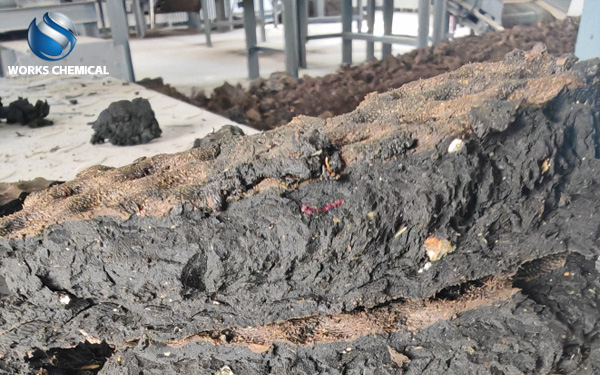
Youdaoplaceholder0 Moisture content breakthrough : Reduce the moisture content of sludge from over 90% to 40%-60%, meeting the environmental protection incineration standards;
Youdaoplaceholder0 Efficiency improvement : The sludge pressing efficiency increases by 100% to 500%, and the single-cycle filtration time is shortened by 50%.
Youdaoplaceholder0 Cost optimization : Reduce the usage of inorganic salts by 60%, lower the dry sludge volume by 20%, and save over 300,000 yuan in chemical and disposal costs annually.
With the advancement of the "dual carbon" goals, sludge treatment is transforming from "reduction" to "resource utilization". Sludge enhancers provide technical support for resource utilization approaches such as sludge incineration power generation and biochar production by reducing moisture content and increasing calorific value.
The pain point of thin sludge pressed by plate and frame filter presses essentially lies in the mismatch of chemicals and processes. The sludge efficiency enhancer has achieved a dual breakthrough in sludge dewatering efficiency and resource utilization level through three major mechanisms: chemical modification, flocculation optimization and water permeability improvement. Enterprises need to scientifically select chemicals based on the properties of sludge, process parameters and long-term benefits, so as to achieve a win-win situation in environmental compliance and cost control.