

In sewage treatment plants, sludge treatment has always been a headache-inducing issue, among which sludge dewatering is a crucial link. If the dehydration effect is poor, not only will the subsequent processing be troublesome, but it will also increase a lot of costs. The emergence of sludge enhancers is like bringing a capable little assistant to sewage treatment plants, making sludge dewatering easy and efficient.
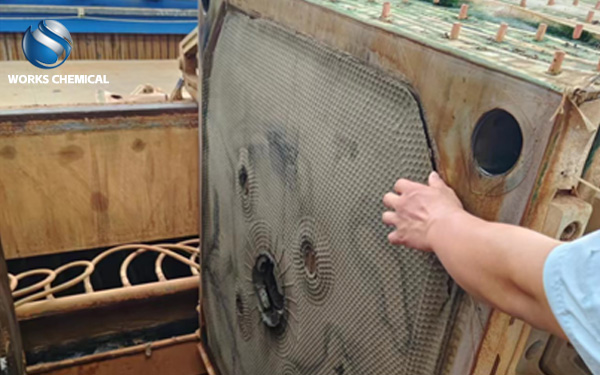
The problem of sludge dewatering
When sewage treatment plants process sewage, they produce a large amount of sludge. These sludges contain a large amount of water. If the water is not removed, the volume of the sludge will be very large, making subsequent transportation and treatment very difficult. Traditional sludge dewatering methods, such as using centrifuges and belt filter presses, can remove some of the water, but the effect is often not very satisfactory. Moreover, some sludge has a relatively high viscosity, which can easily clog the equipment, affecting the dewatering efficiency and also increasing the maintenance cost of the equipment.
The working principle of sludge enhancers
Sludge enhancer is like a magical "magic potion", which can change the properties of sludge. When the sludge enhancer is added to the sludge, it will react with the particles in the sludge, making these particles bond more closely together. In this way, the water in the sludge can be more easily squeezed out, and the dewatering effect can be greatly improved. Meanwhile, the sludge enhancer can also reduce the viscosity of sludge, decrease the occurrence of equipment clogging, and make the dewatering process smoother.
The practical application effect is remarkable
In the practical application of many sewage treatment plants, sludge enhancers have demonstrated outstanding effects. In a certain sewage treatment plant, the moisture content of sludge has never been reduced by traditional dewatering methods, remaining at approximately 80%. This not only takes up a large amount of space, but also incurs high costs for subsequent transportation and handling. Later, they began to use sludge enhancers. After being used for a period of time, a miracle occurred. The moisture content of the sludge dropped below 60%. This means that the volume of sludge has been significantly reduced, making transportation and treatment much easier and lowering costs considerably. Moreover, the operation of the equipment has become more stable, the failure rate has significantly decreased, and a considerable amount of maintenance costs have been saved.
Environmentally friendly and economical
The sludge enhancer not only has a good effect but is also very environmentally friendly. It is generally made of some natural or degradable materials and does not pollute the environment. During use, no harmful substances will be produced and it meets environmental protection requirements. From an economic perspective, although sludge enhancers require certain costs, in the long run, they can reduce the overall cost of sludge treatment. Because of its excellent dewatering effect, the volume of sludge is reduced, thus saving transportation and subsequent treatment costs. The equipment failure rate has decreased, and the maintenance costs have also been reduced. Therefore, using sludge enhancers is an environmentally friendly and economical choice.
In conclusion, sludge enhancers are like the secret weapon for sludge dewatering in sewage treatment plants. They solve the problem of sludge dewatering in a simple and effective way, making the work of sewage treatment plants easier, more efficient and more environmentally friendly. It is believed that in the future, sludge enhancers will be widely applied in more sewage treatment plants.