

In the process of sewage treatment, plate and frame filter presses are commonly used sludge dewatering equipment. However, in actual operation, problems such as slow feeding, dry sludge pressing, and runny hearts are often encountered, which are quite troublesome. But don't worry. The emergence of sludge enhancers has brought effective solutions to these problems.
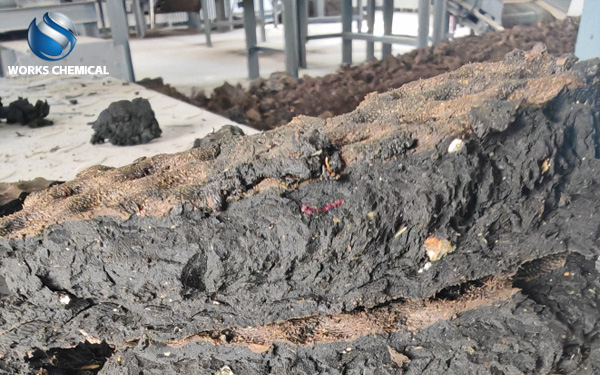
Analysis of Common Problems of Plate and Frame Filter Press
Slow feeding
Slow feeding of the plate and frame filter press will seriously affect the efficiency of the entire sludge treatment process. This is mainly due to the high viscosity and poor fluidity of the sludge. The fine particles and colloidal substances in the sludge aggregate with each other, forming a structure similar to a colloid, which increases the flow resistance of the sludge in pipelines and equipment, and naturally slows down the feeding speed. Moreover, if the moisture content of the sludge is too high, it will further increase its viscosity, making feeding even more difficult.
The pressed mud is not dry.
If the sludge is not pressed dry, it means that the dewatering effect is not ideal, and the moisture content of the treated sludge remains relatively high. This not only increases the cost of subsequent sludge transportation and disposal, but may also cause secondary pollution to the environment. There are many reasons for the sludge not being dried properly. For instance, the nature of the sludge is complex, containing a large amount of organic matter and impurities, which can hinder the discharge of water. In addition, insufficient pressure of the plate and frame filter press or clogging of the filter medium can also lead to incomplete dewatering.
The issue of a runny heart
The "runny heart" refers to the situation where the sludge has not been completely dehydrated inside the plate and frame, and the central part still presents a soft pasty state. The appearance of a runny center will reduce the strength of the sludge, making it difficult to form. During transportation and storage, it is prone to scattering, causing great trouble for subsequent treatment. The problem of runny heart is usually related to the poor flocculation effect of sludge. If the flocculant is improperly selected or the dosage is insufficient, the fine particles in the sludge cannot be effectively aggregated together to form larger flocs, thereby affecting the dewatering effect.
The working principle of sludge enhancers
Sludge enhancer is a chemical agent specially developed for sludge treatment. It can improve the properties of sludge in multiple aspects and solve the above-mentioned problems encountered by plate and frame filter presses.
Improve the fluidity of sludge
Sludge enhancers can disrupt the stability of colloidal particles in sludge, reduce the viscosity of sludge, and significantly improve its fluidity. In this way, the flow resistance of sludge in pipelines and equipment will be reduced, the feeding speed will naturally increase, and the efficiency of the entire treatment process will be greatly improved.
Enhance the flocculation effect
It can undergo chemical reactions with fine particles and colloidal substances in sludge, causing them to rapidly aggregate and form larger flocs. These flocs have good sedimentation and dewatering performance, and can be more easily separated by the plate and frame filter press, thereby improving the dewatering effect and solving the problems of dry and runny sludge.
Optimize the dehydration process
Sludge enhancers can also form a hydrophobic film on the surface of sludge, reducing the binding force between water and sludge particles and promoting the discharge of water. Meanwhile, it can also adjust the pH value of sludge, improve the dewatering environment of sludge, and further enhance the dewatering efficiency.
When a certain sewage treatment plant was using a plate and frame filter press to treat sludge, it encountered problems such as slow feeding, dry sludge pressing and runny core. The amount of sludge processed each day is limited, and the moisture content of the treated sludge is as high as over 80%, which cannot meet the requirements for subsequent disposal. To solve these problems, the factory introduced sludge enhancers.
The effect was immediate after using the sludge enhancer. The feeding speed has significantly increased. The feeding process that originally took several hours to complete has now been shortened to less than one hour. The moisture content of the treated sludge has been reduced to below 60%, meeting the relevant national standards. Moreover, the formation effect of the sludge is good, and the problem of runny core has never occurred again. This not only enhances the efficiency of sludge treatment but also reduces the costs of subsequent transportation and disposal, bringing significant economic and environmental benefits to the plant.
Sludge enhancer, as an effective auxiliary agent for sludge treatment, can provide effective solutions to problems such as slow feeding, dry sludge pressing and runny core in plate and frame filter presses. It improves the efficiency and quality of sludge dewatering by enhancing the fluidity of sludge, strengthening the flocculation effect and optimizing the dewatering process. In practical applications, sludge enhancers have achieved excellent results, bringing great convenience to the sludge treatment work of sewage treatment plants. It is believed that with the continuous development and improvement of technology, sludge enhancers will play a more important role in the field of sludge treatment.