

In the paper mill, a large amount of sludge is produced every day. These sludges are like a "big trouble". Dewatering is extremely difficult and dealing with them is a real headache.
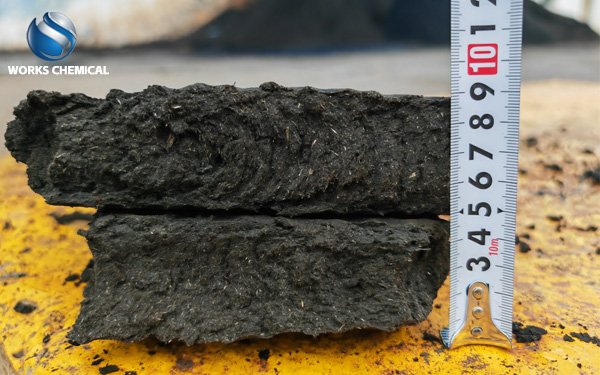
Why is it so difficult to dewater papermaking sludge? This has a lot to do with its composition. Papermaking sludge contains a large amount of fibers, fillers and various chemical agents. These components interweave with each other, forming a complex structure, just like a tangled mess, with moisture tightly locked inside and difficult to separate. Moreover, the particles of papermaking sludge are extremely fine and carry charges on their surfaces, which makes them repel each other and difficult to aggregate together, further increasing the difficulty of dewatering.
Traditional dewatering methods, such as mechanical pressing, can squeeze out some water, but they are often not very effective for difficult-to-treat substances like papermaking sludge. After pressing, the moisture content of the sludge is still very high, and the subsequent transportation and treatment costs are both very large. Moreover, mechanical pressing equipment consumes a lot of energy during operation, is prone to wear and tear, and is not easy to maintain.
Is there a one-trick solution to the problem of dewatering papermaking sludge? Of course there is. That is to use sludge enhancers.
Sludge enhancer is like a magical "magic potion", which can make the papermaking sludge obediently "spit out" the water. Its working principle is actually very simple. Sludge enhancers can neutralize the charges on the surface of sludge particles, eliminate the repulsive force between them, and enable sludge particles to aggregate closely together. In this way, the structure of the sludge becomes loose and porous, making it easier for water to escape from it. Meanwhile, the sludge enhancer can also improve the dewatering performance of sludge, enhance the efficiency of mechanical pressing, and make the dewatering process easier.
The benefits of using sludge enhancers are not limited to solving the problem of difficult dewatering. First of all, it can significantly reduce the moisture content of sludge. After treatment, the moisture content of the sludge can be significantly reduced, from the original 80% to 90% to 60% or even lower. This not only reduces the volume of sludge and lowers transportation costs, but also provides convenience for subsequent sludge disposal. For instance, sludge with a low moisture content can be more easily incinerated, reducing energy consumption. It can also be used to make building materials and achieve the reuse of resources.
Secondly, the use of sludge enhancers can also reduce treatment costs. The traditional dehydration methods consume a large amount of energy and chemicals, and the equipment maintenance cost is also very high. The dosage of sludge enhancers is relatively small, the cost is low, and they can improve dewatering efficiency, reduce equipment operation time and energy consumption, thereby lowering the overall treatment cost.
In addition, the application method of the sludge enhancer is also very simple. Just add the sludge enhancer to the sludge in a certain proportion before it enters the dewatering equipment and stir it evenly. There is no need for large-scale renovations to the existing dehydration equipment. It is easy to operate and promote.
In practical applications, many paper mills have adopted sludge efficiency enhancers and achieved very good results. For instance, in a certain large-scale paper mill, before the use of sludge efficiency enhancers, the sludge dewatering was difficult, the moisture content remained high, and the daily sludge treatment cost was very high. Later, they introduced sludge enhancers. After a period of trial use and adjustment, they found that the dewatering effect of the sludge had significantly improved, the moisture content had greatly decreased, and the treatment cost had also dropped considerably. Now, they have been using sludge enhancers as regular treatment agents for a long time.
In conclusion, the problem of difficult dewatering of papermaking sludge can be easily solved by using sludge enhancers. It can not only improve the dehydration efficiency and reduce the moisture content, but also lower the cost and is simple and convenient to operate. If the paper mill you are in is also troubled by the problem of sludge dewatering, you might as well try the sludge enhancer. I believe it will bring you unexpected effects.