

In the process of sewage treatment, plate and frame filter presses are commonly used sludge dewatering equipment. However, sometimes the moisture content of the sludge treated by them is still relatively high, and the ideal deep dewatering effect cannot be achieved. At this point, the sludge enhancer comes into play. It is the "secret weapon" dedicated to solving the problem of deep dewatering of plate and frame sludge.
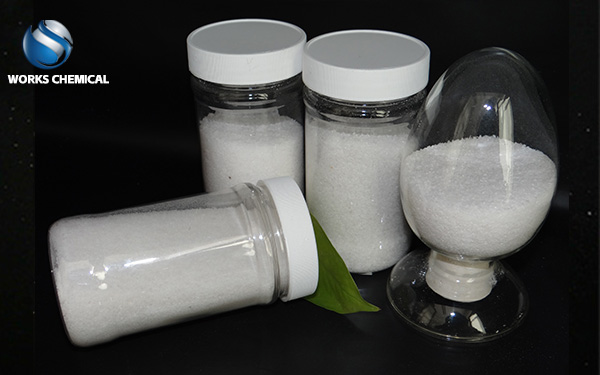
The predicament faced by plate and frame sludge dewatering
Although the plate and frame filter press can squeeze out some of the water in the sludge, the nature of the sludge itself is complex. For instance, it contains a large amount of organic matter and colloidal substances. These components will increase the viscosity of the sludge, and the water will be tightly wrapped inside the sludge particles, making it difficult to completely separate them through simple filtration. Moreover, the composition and properties of sludge from different sources vary greatly, which further increases the difficulty for plate and frame filter presses to achieve deep dewatering. For instance, the sludge produced by industrial wastewater may contain special substances such as heavy metals, while the sludge from domestic sewage has a relatively high content of organic matter. The problems they encounter during dewatering are different, but both have the issue of difficulty in further reducing the moisture content.
The working principle of sludge enhancers
The sludge enhancer is like equipping the plate and frame filter press with an "intelligent assistant". It contains special chemical components. Once added to sludge, these components will rapidly react with organic matter, colloidal substances and other components in the sludge. On the one hand, it can disrupt the charge balance on the surface of sludge particles, reduce the viscosity of the sludge, and make it easier for the water that was originally tightly held together to be released. On the other hand, it can also form a bridging structure between sludge particles, gathering fine sludge particles together to form larger flocs. These flocs are not only more easily retained by the plate and frame filter press, but also during the filtration process, water can be discharged from the flocs more smoothly, thus achieving deep dewatering of sludge.
The practical application effect is remarkable
In actual sewage treatment plants, many have adopted sludge enhancers to enhance the dewatering effect of plate and frame sludge. There is a sewage treatment plant. Previously, the sludge treated by the plate and frame filter press had a moisture content of around 75% to 80%, which could not meet the requirements for subsequent treatment and disposal. Later, sludge enhancers were introduced. After being added to the sludge in a certain proportion and processed by a plate and frame filter press, the moisture content of the sludge was directly reduced to below 60%. This not only significantly reduces the volume of sludge, lowers the costs of subsequent transportation and disposal, but also enhances the resource utilization value of sludge. Moreover, after adding the sludge efficiency enhancer, the operating efficiency of the plate and frame filter press has also been improved, the filtration cycle has been shortened, and the energy consumption of the equipment has been correspondingly reduced.
In conclusion, sludge enhancers play a significant role in the deep dewatering of plate and frame sludge. With its unique working principle and remarkable application effect, it provides an effective solution for sewage treatment plants to solve the problem of sludge dewatering.