

At present, with the vigorous development of the papermaking industry, the treatment of papermaking sludge has become an important issue that needs to be urgently addressed. Papermaking sludge not only generates a large amount but also has a complex composition, containing a large amount of cellulose, lignin, hemicellulose and heavy metals and other harmful substances. If not properly treated, it will cause serious pollution to the environment. The emergence of sludge enhancers has brought new hope for the effective treatment of papermaking sludge.
The difficulties in the treatment of papermaking sludge
Papermaking sludge is characterized by high moisture content and difficulty in dewatering. Traditional sludge dewatering methods, such as mechanical dewatering, can reduce the moisture content of sludge to a certain extent, but the effect is often unsatisfactory. The moisture content of the mud cake remains relatively high, which not only increases the difficulty and cost of subsequent treatment but also occupies a large amount of land resources for landfill. Moreover, sludge with a high moisture content is also prone to leakage and other problems during transportation, causing secondary pollution to the environment.
The working principle of sludge enhancers
Sludge enhancer is a kind of chemical agent specially developed for the problem of sludge dewatering. It can promote the dewatering of sludge by altering the surface properties of sludge particles, destroying the colloidal structure in sludge, and enhancing the cohesion between sludge particles. Specifically, the high-molecular polymer in the sludge enhancer can adsorb on the surface of sludge particles, forming a protective film that reduces the affinity between sludge particles and water. At the same time, it connects multiple sludge particles together through bridging, forming larger flocs, which is convenient for subsequent dewatering treatment.
The practical application effect in the treatment of papermaking sludge
Improve dehydration efficiency
After adding sludge enhancers in the treatment of papermaking sludge, the dewatering efficiency of sludge can be significantly improved. Take a certain paper mill as an example. Before using the sludge efficiency enhancer, the traditional mechanical dewatering method was adopted, and the moisture content of the sludge cake was as high as over 80%. After using the sludge enhancer and undergoing the same dewatering process, the moisture content of the sludge cake was reduced to below 60%, significantly reducing the volume and weight of the sludge cake and lowering the cost of subsequent treatment.
Improve the quality of the mud cake
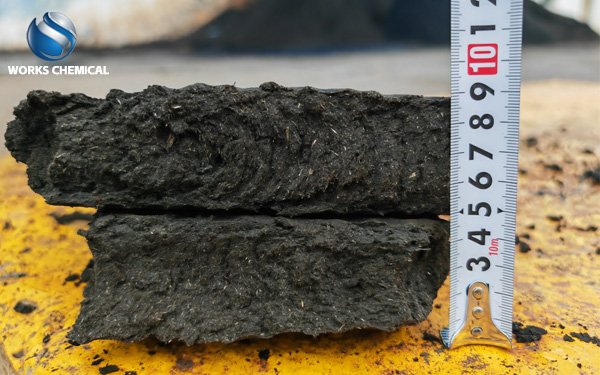
Sludge enhancers can also improve the quality of sludge cakes. The sludge cake treated with sludge enhancer has a more compact structure, higher strength, and is less likely to break or scatter. This not only facilitates the transportation and storage of mud cakes, but also reduces environmental pollution during transportation. Moreover, high-quality mud cakes can be further resourcefully utilized, such as being made into building materials and fertilizers, achieving the reduction, harmless treatment and resourceful utilization of sludge.
Reduce processing costs
In the long run, the use of sludge enhancers to treat papermaking sludge can reduce the overall treatment cost. Although sludge enhancers themselves require certain cost input, due to their ability to enhance dewatering efficiency, improve the quality of sludge cakes, and reduce the difficulty and cost of subsequent treatment, such as reducing the land area needed for landfill and lowering transportation costs, from a comprehensive cost perspective, the use of sludge enhancers is a more economical and feasible choice.
Select the appropriate sludge dewatering agent
When choosing a sludge enhancer, multiple factors need to be taken into consideration. First, the nature of the sludge should be considered. Different sources and compositions of papermaking sludge have different requirements for sludge enhancers. Secondly, the dewatering process and equipment should be taken into consideration. Different dewatering processes and equipment have different performance requirements for sludge enhancers. In addition, factors such as the cost and environmental performance of sludge enhancers also need to be taken into consideration. It is recommended to conduct small-scale and medium-scale tests when making a selection, and determine the most suitable model of sludge enhancer based on the actual effect.
In conclusion, sludge enhancers have significant advantages and broad application prospects in the treatment of papermaking sludge. It can effectively solve the problem of difficult dewatering of papermaking sludge, improve dewatering efficiency, enhance the quality of mud cakes, reduce treatment costs, and provide strong support for the sustainable development of the papermaking industry.