

I. Challenges Faced by Municipal Sludge Treatment
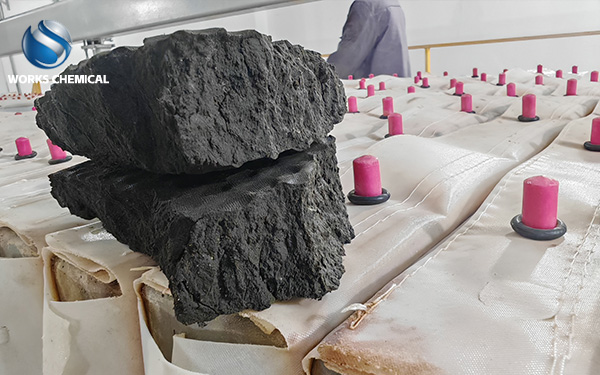
Municipal sludge is a by-product generated during the sewage treatment process, containing a large amount of water, organic matter, pathogens, heavy metals and other substances. Traditional sludge treatment is confronted with several major challenges
Youdaoplaceholder0 High moisture content : The moisture content of raw sludge is usually as high as 95%-99%, with a large volume and high transportation and treatment costs
Youdaoplaceholder0 Difficult dewatering : The colloidal structure and hydrophilic substances in sludge make mechanical dewatering inefficient
Youdaoplaceholder0 High processing cost : Traditional processing methods (such as thermal drying) consume a lot of energy and have poor economic efficiency
Youdaoplaceholder0 Secondary pollution risk : Improper handling may lead to the release of harmful substances and pollute the environment
These challenges have prompted researchers to constantly seek more efficient sludge dewatering technologies, and the application of sludge enhancers is one of the most breakthrough solutions in recent years.
Ii. Technical Principles of Sludge Enhancers
Sludge enhancers are a type of chemical conditioner specifically developed for the characteristics of sludge. They enhance the dewatering performance by altering the physical and chemical properties of sludge. Its mechanism of action mainly includes:
Youdaoplaceholder0 Charge neutralization effect : The surface of sludge particles usually carries a negative charge. In sludge enhancers, this charge can be neutralized, thereby disrupting the stability of colloids
Youdaoplaceholder0 Flocculation effect : The high-molecular polymer in the sludge enhancer can adsorb multiple sludge particles, forming larger and denser flocs
Youdaoplaceholder0 Structural modification : Alter the form of water in sludge, converting bound water into free water for easier removal
Youdaoplaceholder0 Cell wall breaking effect : Some sludge enhancers can destroy the cell walls of microorganisms and release the internal bound water
Compared with traditional flocculants (such as PAC and PAM), the new generation of sludge efficiency enhancers has the advantages of stronger targeting , less dosage and more lasting effect .
Iii. Practical Application Effects of Sludge Enhancers
Based on the operation data of multiple municipal sewage treatment plants in 2025, the sludge dewatering effect has been significantly improved after the use of sludge enhancers:
Youdaoplaceholder0 moisture content significantly reduced :
Moisture content after traditional mechanical dehydration: 78%-82%
Moisture content after using the enhancer: 58%-65%
In some cases, the moisture content can be reduced to below 50%
Youdaoplaceholder0 dehydration efficiency improvement :
The dehydration time is shortened by 30% to 50%
The processing capacity of the equipment has increased by 20% to 35%
The service life of the filter cloth/filter belt is prolonged
Youdaoplaceholder0 comprehensive cost decrease :
Pharmaceutical cost: Increase by 15%-25%
Energy consumption cost: Reduced by 30% to 40%
Transportation and disposal costs: Reduced by 40% to 60%
The overall processing cost has decreased by approximately 20% to 35%
Youdaoplaceholder0 improvement of sludge properties :
The increase in calorific value is conducive to subsequent incineration treatment
The solidification effect of heavy metals is enhanced, reducing environmental risks
The reduction of odorous substances improves the working environment
Iv. Selection and Optimization of Sludge Enhancers
The selection of an appropriate sludge enhancer requires consideration of multiple factors
Youdaoplaceholder0 Sludge characteristics : Select the corresponding formula based on the sludge source (domestic sludge, industrial mixed sludge, etc.), organic matter content, etc
Youdaoplaceholder0 processing technology : compatibility with different equipment such as belt filter press, plate and frame filter press, and centrifugal dewatering
Subsequent disposal method of : adjust the composition of the enhancer according to different disposal requirements such as landfill, incineration, and composting
Youdaoplaceholder0 Economic assessment : Comprehensively consider the cost of chemicals, energy-saving benefits and savings in disposal expenses
Municipal sludge treatment is an important part of urban environmental governance. The application of sludge enhancers provides an effective solution to the problem of high moisture content. The promotion of this technology will not only reduce environmental risks but also create significant economic benefits, making important contributions to achieving the "dual carbon" goals and sustainable development.