

During the sludge treatment process, the key issue that has always been of great concern in the industry is how to achieve efficient dewatering, reduce the moisture content, decrease the dosage of chemicals, and accelerate the reaction speed without altering the original pH value of the sludge. Sludge enhancer, as a new type of highly efficient chemical agent, has gained popularity among more and more wastewater treatment plants due to its unique performance advantages.

I. Four Core Advantages of Sludge Enhancing Agents
- Does not alter the original pH value of the sludge
Traditional dehydrating agents (such as polyacrylamide, lime, etc.) often cause fluctuations in the pH value of the sludge during use, which affects subsequent treatment processes. However, the sludge enhancing agent uses a mild chemical formula, which can achieve efficient dehydration while maintaining the original pH range of the sludge, avoiding additional burdens on equipment and the environment.
Low dosage, significant economic benefits
The dosage of the sludge enhancer is only 1/3 to 1/2 of that of traditional chemicals, yet it can achieve better dewatering results. This not only reduces the cost of purchasing chemicals, but also alleviates the pressure of transportation and storage, saving a large amount of operational expenses for the sewage treatment plant.
Fast reaction speed, enhanced processing efficiency
The sludge enhancer can quickly combine with the moisture in the sludge to form a stable floc, shortening the dewatering time. In practical applications, the sludge input volume can be increased by 20% - 30%, significantly improving the processing efficiency, especially suitable for wastewater treatment plants with high load operation.
Significantly reduce the moisture content of sludge
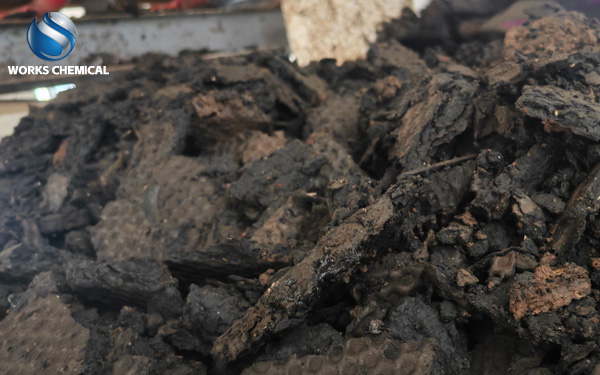
By optimizing the flocculation structure and dewatering performance of sludge, the sludge enhancer can reduce the moisture content of the sludge cake to below 60%, or even lower. This not only reduces the volume of sludge but also provides convenience for subsequent incineration, landfill or resource utilization.
II. Application Scenarios and Success Cases
Sludge enhancers are widely used in the treatment of municipal sludge and industrial sludge (such as in the printing, papermaking, and chemical industries). Taking a municipal wastewater treatment plant as an example, after using the sludge enhancer:
The sludge feed volume has been increased by 25%, which has solved the problem of long sludge feeding time for the filter press.
The moisture content of the sludge cake decreased from 75% to 58%, significantly reducing transportation and disposal costs.
The dosage of the medicine was reduced by 40%, resulting in annual cost savings of over 500,000 yuan.
III. Recommended Sludge Enhancing Agents
The sludge enhancing agent, with its stable performance and extensive application experience, has become the preferred brand in the industry. Its features include: pH value neutral: Does not interfere with the original chemical properties of the sludge;
Broad adaptability: Suitable for various types of sludge;
Environmental safety: No risk of secondary pollution.
IV. Usage Suggestions
Pilot Testing: Based on the characteristics of the sludge, conduct a pilot test to determine the optimal dosage.
Process optimization: Adjust the dosage points of the reagents based on the operating parameters of the filter press or centrifuge.
Continuous monitoring: Regularly assess the dehydrating effect to ensure stable operation over the long term.
The sludge enhancer, with its features of "low dosage, rapid reaction, stable pH value, and efficient dewatering", provides a more economical and environmentally friendly solution for sludge treatment. Choosing the sludge enhancer can help your sludge treatment process reach a new level!