

1. What is the core function of sludge dewatering agents?
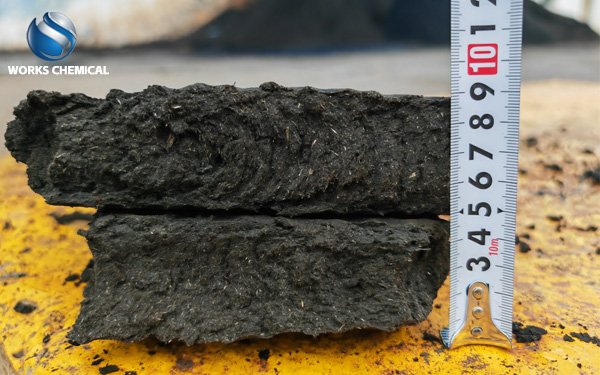
Sludge dewatering agents are a crucial part in wastewater treatment and sludge disposal. Their core function is to improve the dewatering performance of sludge through chemical conditioning, reducing the moisture content, decreasing volume and weight, and thereby lowering the costs of subsequent transportation, incineration, landfilling, or resource utilization. Traditional agents (such as lime, polyaluminum chloride, polyacrylamide, etc.) can partially achieve dewatering, but they have problems such as equipment corrosion, filter cloth blockage, increased sludge volume, or pH value fluctuations.
II. What are the drawbacks of traditional sludge dewatering agents?
High corrosiveness: Agents such as lime and iron salts can corrode the dewatering equipment (such as filter cloths in plate and frame filter presses), shortening the lifespan of the equipment.
Sludge volume increase: After lime treatment, the sludge volume expands, increasing the burden of subsequent treatment.
pH value imbalance: Traditional agents may alter the pH value of the sludge, affecting subsequent processes such as incineration or composting for resource utilization.
Low dehydration efficiency: Sludge with high solid content (such as those from dyeing and papermaking industries) is prone to clog the filter cloth, resulting in low dehydration efficiency.
III. Why Can the Sludge Enhancer Stand Out?
1. Technical Principle: Solving the Dewatering Bottleneck from Multiple Aspects
The sludge enhancer is designed with a composite formula and achieves efficient dewatering through three mechanisms:
Charge neutralization and bridging effect: Inorganic compounds and surface structure modifiers penetrate into the interior of sludge colloids, disrupting the double electric layer structure of the colloids, causing the sludge particles to lose their repulsive force and promoting flocculation.
Cellulose lysis and lipid removal: The cellulose breaker breaks down the extracellular polymers (EPS) and lipid substances in the sludge, significantly reducing the sludge viscosity.
Release bound water: By disrupting the double electric layer structure of the original bacterial aggregates in the sludge particles, the water within the ionic hydration film layer (including internal free water, interstitial water and some bound water) is released, reducing the Zeta potential of the sludge particles and improving their hydrophobicity.
2. Core advantages: High efficiency, environmental friendliness, low cost
Deep dehydration, water content reduction by 40%-60%: Combined with plate and frame filter presses, it can reduce the water content of municipal, papermaking, and dyeing sludge from over 90% to 40%-60%. In some cases, it has even dropped to as low as 54.27%.
Increase equipment efficiency by 100% - 500%: Under high-pressure feeding and pressing processes, the sludge pressing cycle is shortened, and production efficiency is significantly improved.
No corrosion, no clogging of filter cloth: Free of chloride ions, no need to add lime, avoiding equipment corrosion and filter cloth blockage, reducing the frequency of filter cloth replacement and saving operating costs.
Do not change the pH value of the sludge: Keep the sludge neutral, which will not affect subsequent resource utilization such as incineration, brick-making or composting.
Low dosage, high cost-effectiveness: Add at a rate of 20% - 45% by dry weight. The dosage of the agent is much lower than that of traditional agents, resulting in a cost reduction of over 30% overall.
3. Wide application scenarios
The sludge enhancer is applicable for deep dehydration of sludge in municipal wastewater treatment plants, papermaking, dyeing, chemical industry, electroplating, oil fields and other industries. It is particularly effective for sludge with high solid content and high viscosity (such as papermaking sludge and dyeing sludge). For example, after a large papermaking enterprise introduced the sludge enhancer, the efficiency of the dehydration equipment increased by 30%, and the properties of the sludge cake were stable, making it convenient for incineration for power generation or fertilizer production.