

In actual sludge deep dewatering projects, we often hear customers complaining: "We bought the best plate and frame filter press, but why is the sludge cake still not dry enough?" or "We changed to very expensive chemicals, but why is the filter cloth still clogged so severely?" In response to these common misunderstandings, the technical engineers from Works Co., Ltd. provided clear answers: Sludge dewatering is a systematic project. The advantages of a single piece of equipment or a single type of chemical cannot solve the fundamental problem. "The perfect match of chemicals and equipment" is the key to breaking through the bottleneck.
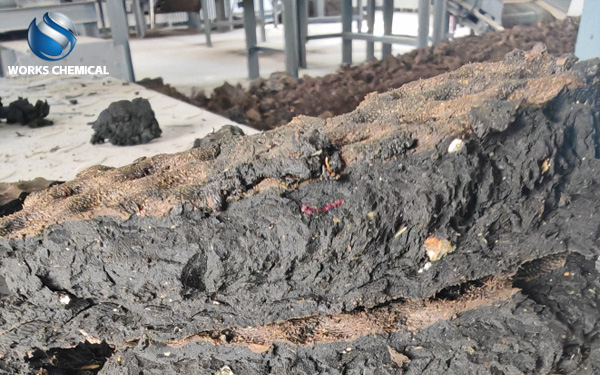
The properties of sludge vary greatly. Municipal sludge, paper sludge, dyeing sludge, and chemical sludge all have different organic content, viscosity, and hydrophilicity. Similarly, the operation parameters of the dewatering equipment are specific, such as feed pressure, pressing time, and filter cloth pore size. If the selection of the reagent is inappropriate and the moisture in the sludge cannot be effectively released, even the equipment with higher pressure will be of no avail; conversely, if the equipment parameters are set improperly, even if the reagent conditioning effect is excellent, the expected dewatering effect cannot be achieved.
Over the years of its service practice, Works has developed a set of "pharmaceutical-machine collaboration" diagnostic methods. When technicians enter a project, they will first conduct a comprehensive "physical examination" of the customer's plate and frame filter press, including the permeability of the filter cloth, the sealing performance of the filter chamber, and the pressure stability of the hydraulic system. Based on this, they will then conduct cup experiments combined with the physical and chemical indicators of the sludge. For example, for equipment with smaller filter cloth pore diameters, Works will recommend special sludge enhancers with better fluidity and tighter floc structure to prevent turbid filtrate and filter cloth blockage; for high-pressure diaphragm filter presses, a more pressure-resistant and thoroughly gel-breaking chemical formula will be selected to ensure that the moisture content of the sludge cake can be further reduced under high-pressure pressing.
"Often, the problems customers encounter are not due to equipment aging, but rather the mismatch between the medication and the working conditions," the technical director of Works explained. "We conduct free on-site sampling, simulate the customer's actual working conditions in the laboratory, adjust the slurry injection concentration, conditioning time, and pressing pressure, and thereby find the optimal combination of operating parameters."
This "not only selling products, but also providing services" concept has enabled Works to gain a good reputation in the market. By optimizing the matching between the agents and equipment, many outdated filter press equipment have regained their vitality. Not only has the moisture content of the sludge cake met the standards, but the filtration cycle has been shortened and the production capacity has significantly increased. For enterprises, this means that they do not need to invest a large amount of money in replacing equipment. They only need to make process adjustments through Works' professional services to achieve the goal of cost reduction and efficiency improvement.