

In 2026, as the "dual carbon" strategy is further implemented and environmental supervision becomes more regular, the sludge disposal industry is undergoing a profound transformation from "final landfill" to "resource utilization". Over the past decade, traditional inorganic conditioning agents such as lime, iron salts, and polyaluminum chloride have long dominated the market, being widely used due to their low cost and simple operation. However, with increasingly strict environmental requirements and rising terminal disposal costs, the shortcomings of these technologies have become more prominent: excessive dosage leads to increased weight of the sludge cake, significant reduction in calorific value, severe equipment corrosion, and generally difficulty in breaking through the 60% moisture content dehydration bottleneck, ultimately resulting in a "false dehydration" predicament - seemingly dry sludge cakes quickly re-wet during subsequent transportation, incineration, or landfill, with hidden costs remaining high.
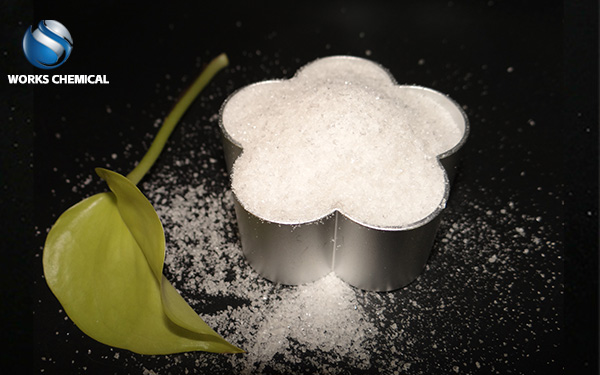
The technical team of Works Chemical Co., Ltd. (hereinafter referred to as "Works") pointed out that the essence of sludge dewatering lies in breaking the bound water within the colloidal structure, rather than relying on external force to squeeze out the free water. Traditional chemicals can only remove the surface moisture but are helpless against the bound water encapsulated within the extracellular polymers of microorganisms. Works has been deeply engaged in the plate and frame filtration line for nearly a decade, and has successfully developed a new type of modified polymer sludge enhancer for difficult-to-treat sludges from industries such as dyeing, papermaking, and municipal services. This solution completely abandons the high dosage mode of calcium, iron, and aluminum salts and utilizes the dual synergy of charge neutralization and adsorption bridging to precisely disrupt the hydrophilic structure of the sludge. Without changing the original composition of organic matter, it can stably control the moisture content of the sludge cake after plate and frame filtration within the range of 40%–55%. This breakthrough not only reduces the sludge volume to less than one-third of the original size but also completely retains the calorific value of the sludge (increasing by 800–1200 kcal/kg), creating favorable conditions for subsequent resource utilization paths such as incineration power generation, cement kiln co-processing, or preparation of nutrient soil for landscaping.
From an economic perspective, although the cost per ton of the chemical agent used by Works is slightly higher than that of traditional inorganic salts, the overall treatment cost has decreased by more than 30%. The reduction in sludge cake volume directly lowers transportation and landfill costs, the increase in calorific value eliminates the need for additional auxiliary fuel at the incineration plant, and the reduced equipment corrosion leads to a significant reduction in maintenance costs.
Taking a municipal wastewater treatment plant with a daily sludge treatment capacity of 100 tons as an example, the annual overall savings can reach 1.5-2 million yuan. In the context of regular environmental supervision, this technology completely avoids the risks of excessive chloride ions and secondary pollution caused by lime, and the sludge cake can safely enter the building materials or energy conversion industrial chain.
Works believes that the sludge treatment market in 2026 has entered a new stage of "improving the efficiency of existing capacity and enhancing the quality of new capacity". The era of solely pursuing low prices has come to an end. Efficient, environmentally friendly, and low-cost deep dehydration technologies, especially the polymer-modified solutions that retain the calorific value of organic matter, will become the mainstream in the industry. In the future, sludge will no longer be a burden but a "urban mine" waiting to be exploited - Works is leading this green revolution from "landfilling" to "value enhancement" with its decade of frontline experience.