

Plate and frame filter press treatment of sludge requires extremely high stability. Even though many enterprises strictly control the dosing process, problems such as long filter press cycle, uneven thickness of the sludge cake, soft core and core leakage, and excessive moisture content still frequently occur. This not only affects production efficiency but also may lead to failure in the acceptance of solid waste disposal. The core reason is the unstable performance of traditional dehydration agents.
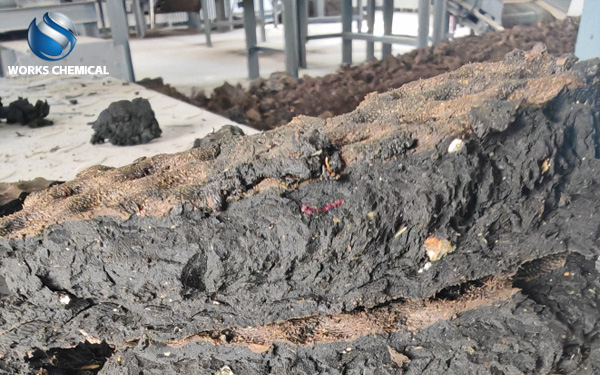
Traditional iron salt and aluminum salt agents are highly susceptible to variations in water quality, sludge concentration, and temperature. Even slight fluctuations in the working conditions can lead to a significant decline in the dehydrating effect. Moreover, the ratio of multiple drug agents is difficult to be precisely controlled, and there is a large margin for human error, which can result in insufficient flocculation and incomplete dehydrating, causing frequent production setbacks and delaying the overall progress of wastewater treatment.
The sludge enhancer, as a specialized high-molecular-weight agent for plate-and-frame deep dehydration, has stable performance and strong anti-interference ability. It completely resolves the instability issues of traditional processes. The product integrates conditioning, flocculation, and dehydration functions. Its formula is balanced and has wide applicability. It is not affected by minor fluctuations in water quality, temperature, and sludge concentration. The entire process does not require complex ratios, and the dosing operation is simple and convenient.
After the sludge enhancer is added to the sludge, it can quickly complete the entire process of colloidal destabilization, particle flocculation, and water stripping. The formed sludge particles are quick to take shape, have a tight structure, and excellent water permeability. During the filtration process, the drainage is uniform and smooth, and the filtration cycle is fixed and controllable. This completely eliminates problems such as inconsistent thickness of the sludge cake, being dry on the outside and wet on the inside, and having a soft core. The moisture content of the sludge cake is uniform across batches and meets the standards. The simple process combined with stable dehydration results not only reduces the risk of human operational errors but also significantly increases the sludge treatment capacity. It is an excellent solution for ensuring the continuous and stable production of plate-and-frame sludge dewatering.