

Core pain points: Traditional medications require large dosages, result in significant increases in sludge production, and have high disposal costs for solid waste.
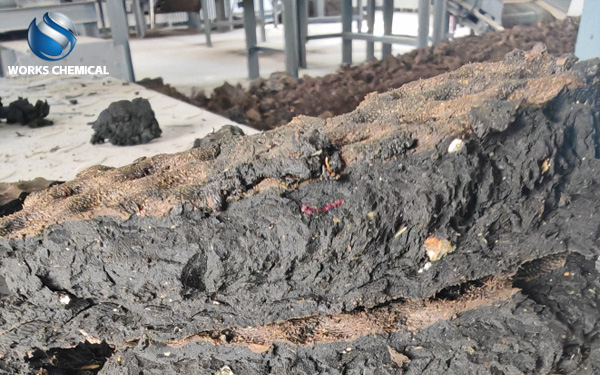
In the ledger of sludge treatment, many enterprises only focus on the purchase price of the chemicals, but overlook the astonishing hidden costs brought about by traditional processes. By using large amounts of lime, iron salts or aluminum salts for conditioning, although the chemicals themselves are cheap, they will directly become part of the sludge. This "incremental effect" often leads to a 20% or even greater increase in the total amount of sludge. This means that enterprises not only have to spend money on purchasing the chemicals, but also have to pay expensive transportation fees and final solid waste disposal fees (such as incineration fees or landfill fees) for these additional "chemical residues".
As a high-molecular polymer, the dosage of sludge enhancer is extremely low, and it does not produce additional solid waste sedimentation like inorganic salts. Thus, it truly achieves "degradation" treatment.
After actual operation and calculation by multiple enterprises, in terms of comprehensive operating costs, the use of the sludge enhancement agent solution can reduce by more than 50% compared to the traditional process. This is not only about saving on the cost of the reagents, but also because the significantly reduced moisture content of the sludge cake and the decreased total amount of sludge lead to a sharp drop in subsequent transportation and disposal costs. Moreover, since there is no longer a need to add corrosive acid or alkali reagents, the maintenance cost of the equipment also drops significantly.
In the current "cost reduction and efficiency improvement" environment, accurately calculating this "overall account" is of utmost importance. Choosing a non-incremental sludge efficiency enhancer can save enterprises tens of thousands or even millions of yuan in real money each year.