

Core pain points: The composition of sludge varies significantly across different industries; traditional universal chemicals do not work well in this context; the dehydration efficiency of specific sludge is extremely low.
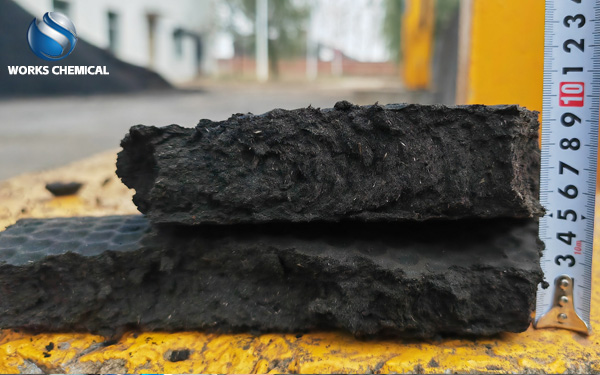
In the field of sludge treatment, what often troubles environmental engineers the most is not the equipment, but the various and unpredictable "temperaments" of the sludge itself. Municipal sludge has a high organic content and is highly viscous; papermaking sludge contains a lot of fibers and is prone to clogging filter cloths; printing and dyeing, as well as electroplating sludges have complex compositions and even contain strong acids and strong bases. Facing these sludges with such diverse characteristics, many enterprises, in an attempt to save time and effort, are accustomed to using a single general traditional agent (such as iron salts or aluminum salts) to deal with all situations.
This "massive-scale, one-for-all" approach has directly led to serious "incompatibility issues": when dealing with municipal sludge, the chemicals simply cannot break down the colloids, resulting in soft sludge cakes; when handling paper sludge, the filtrate is turbid and the filter cloth is prone to scaling and clogging; when dealing with dyeing sludge, the dehydration efficiency is shockingly low. The ultimate outcome is that the equipment operates in vain, the chemicals are wasted, and the dehydration effect remains stuck at a bottleneck stage.
For the specific problems faced by different industries, Works Chemical has provided tailor-made solutions:
For municipal sludge: The focus is on overcoming the high viscosity caused by high organic content, significantly releasing intracellular water, and solving the problem of "soft center" in the sludge cake.
For papermaking sludge: By using a special modified formula, efficient dehydration can be achieved while avoiding fiber entanglement and filter cloth blockage, thereby protecting the permeability of the equipment.
For printing and dyeing, mineral processing and chemical sludges: It has extremely strong resistance to acid and alkali as well as anti-interference ability. Even in cases of significant fluctuations in water quality, it can still maintain stable flocculation and dewatering effects.
Works Chemical not only offers a single chemical product, but also provides "one factory, one solution" professional technical services. In the face of complex sludge characteristics, the technical team of Works Chemical offers free technical consultation. Through precise simulation and selection in the laboratory, they will match the most suitable sludge efficiency enhancer model for you.