

At present, the majority of domestic plate-and-frame sludge deep dehydration systems still employ inorganic conditioning systems consisting of PAC, polymeric iron, and lime. This process is mature and has a straightforward cost structure, but it has inherent structural technical shortcomings that are difficult to address through on-site fine-tuning. These shortcomings are the fundamental reasons for the unstable sludge moisture content, large increase in solid waste, and frequent fluctuations in operation. Analyzing from the physicochemical characteristics of sludge, inorganic salt conditioning has a single mechanism of "charge neutralization and simple flocculation", which can only remove free water and some capillary water in the sludge system, but cannot intervene in the water retention structure of extracellular polymeric substances (EPS) gel.
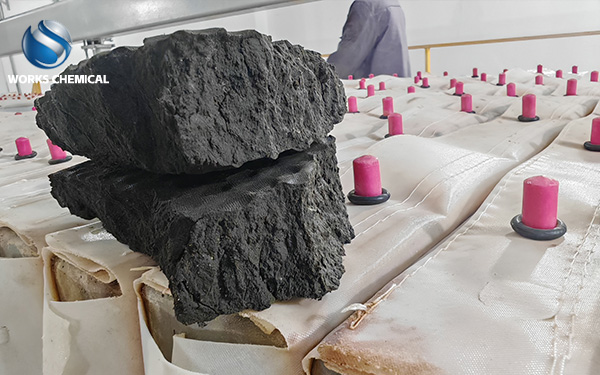
The main reason why primary sludge is difficult to be dewatered lies in the fact that the EPS gel layer wraps around the particle surface, forming a stable hydration film, which keeps the fine colloids suspended for a long time and makes them difficult to be compacted. Traditional iron-aluminum salts and lime cannot break down the EPS cross-linked structure. During the high-pressure pressing process, the flocs are rapidly compacted under pressure, and the pores close, making it impossible for the internal bound water to be discharged. Therefore, the sludge cake generally presents the objective phenomena of high moisture content, loose internal structure, and uneven dryness.
Meanwhile, after the inorganic reagents undergo hydrolysis, they will generate a large amount of solid-phase metal hydroxide deposits, which are stably retained in the sludge cake and result in a significant increase in the total dry weight of the sludge. This increase is not the organic matter of the sludge, but inert inorganic ash, directly leading to a rigid increase in the costs of subsequent transportation, landfilling, and incineration disposal. Moreover, the filtrate of the iron salt system is slightly acidic, while that of the lime system is slightly alkaline, causing fluctuations in the effluent pH, and requiring a neutralization process, thereby increasing the system operation nodes and the consumption of reagents.
The sludge enhancer adopts a modified polymer polymer compound system to supplement the "breaking the wall and releasing water" function that traditional inorganic chemicals lack. By destroying the hydrophilic structure of EPS and optimizing the pore structure of the flocs, it achieves an improvement in the efficiency of sludge-water separation. The product does not rely on a high dosage of chemicals to achieve dewatering effects. It can compensate for the structural deficiencies of the traditional conditioning system without changing the existing plate and frame equipment or adding new process units, and realize the stable process optimization of the plate and frame sludge dewatering system.