

In the actual operation and maintenance of plate and frame filter for sludge treatment, most plants generally encounter problems such as long sludge inlet time, insufficient cake thickness, and low sludge output. The core cause lies in the strong colloidal stability of the original sludge, the abundance of fine particles, and its high viscosity. Conventional single coagulant agents cannot completely improve the physical properties of the sludge, resulting in high inlet resistance, incomplete solid-liquid separation, low effective utilization rate of the filter press equipment, and severely restricting the sludge disposal capacity. Sludge enhancer, as a multifunctional composite agent that integrates coagulation, conditioning, and deep dehydration, can optimize the physical properties of the sludge from the root cause and efficiently solve various production pain points of plate and frame filter.
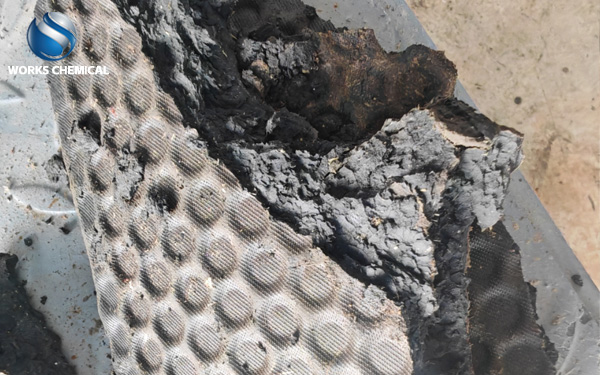
The sludge enhancer addresses the operational drawbacks of equipment through multiple technical mechanisms. Firstly, the efficient flocculation technology can rapidly neutralize the negative charges of the sludge colloids, breaking the stable suspension system. Relying on the bridging adsorption effect of polymers, it gathers the fine suspended particles to form dense and uniform large flocs. This effectively reduces the viscosity and flow resistance of the sludge slurry, solving the problems of slow sludge intake and pipeline blockage caused by the fine and viscous slurry, significantly shortening the single sludge intake time of the filter press equipment and improving the sludge intake efficiency.
Secondly, the exclusive conditioning technology is the core key to addressing the issues of thin sludge cake and low production rate. The agents can break down the organic micelles of the sludge and the cell walls of microorganisms, releasing the intracellular water and capillary water encapsulated within, and reconstructing the stacking structure of the sludge particles. This effectively enhances the porosity and stacking density of the filter cake, improving the problems of loose flocs, insufficient compaction degree, and thin sludge cake after traditional sludge pressing, allowing the sludge to be quickly compacted and shaped under the high-pressure conditions of the filter press, and increasing the thickness of the sludge cake.
Meanwhile, its deep dehydration enhancement function can stabilize and optimize the filtration process. It does not require the addition of auxiliary chemicals such as lime or iron salts, thus avoiding the increase of impurities that would occupy the filter chamber space and affect the cake formation effect. The entire process ensures smooth water permeability of the filter cloth, uniform dehydration rate, and a full and thick cake formed in a single pressurization process. This completely resolves the problems of flaky cakes, thin cakes, and non-cake formation, significantly increasing the output of sludge treatment per batch.
Engineering practice data have confirmed that after adding sludge enhancer, the sludge feeding time of the plate and frame equipment can be shortened by more than 25%, the thickness of the sludge cake significantly increases, the daily processing capacity of a single equipment can be increased by 20% - 30%, and the moisture content of the sludge cake is stably controlled below 60%. The reagent is highly adaptable and does not require the renovation of existing equipment. It can efficiently solve the bottleneck of sludge dewatering capacity of plate and frame equipment, helping enterprises achieve efficient and low-cost large-scale disposal of sludge.