

In the field of industrial and municipal sludge treatment, the high moisture content has always been the core bottleneck restricting enterprises from achieving environmental protection standards and reducing costs and increasing efficiency. Many enterprises have long relied on traditional inorganic conditioning agents such as lime and iron salts. These chemicals can only neutralize the surface charges of the particles but cannot break the cell walls of microorganisms. This results in the water being firmly locked in the center of the sludge cake during high-pressure pressing, forming a "soft core" phenomenon where the outer layer is dry while the inner layer is wet. This not only significantly reduces the overall dryness of the sludge cake but also directly increases the huge costs of transportation and subsequent disposal.
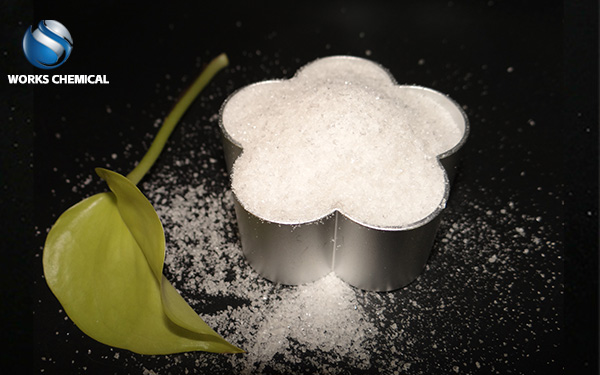
In response to this industry pain point, Works Chemical, leveraging its nearly ten years of frontline industry experience, has precisely developed a sludge enhancer. This is a multifunctional modified polymer specially designed for the plate and frame filtration process. Through high-molecular composite technology, it completely breaks through the limitations of traditional processes. It can precisely act on the sludge colloid structure, completely break down the cell walls and gels, fully release the bound water in the organic matter of the sludge, and achieve the maximum separation of sludge and water through efficient flocculation and aggregation.
During the actual plate and frame filtration process, the sludge enhancer can effectively clear the water-permeable channels, significantly increasing the sludge input volume without adding extra filtration time. The treated sludge cake not only has a thick thickness but also has uniform dryness both inside and outside, completely eliminating the "soft center" phenomenon. At the same time, its optimized floc state enables the sludge cake to naturally fall off after filtration, significantly reducing the frequency of filter cloth adhesion and manual cleaning. This deep dehydration effect not only reduces the operating load of the equipment but also reduces the transportation and solid waste treatment costs of the enterprise from the source. It is the preferred solution for modern deep sludge dehydration and achieving long-term cost reduction and efficiency improvement.