

Municipal sludge, with a water content of up to 97% - 99% and an extremely high organic matter content, exhibits extremely strong viscosity during the dehydration process. This highly viscous gel-like liquid substance not only makes the water-permeable channels of the filter press extremely prone to clogging, but also leaves traditional chemicals helpless - although adding large amounts of lime or iron salts can produce a certain degree of formation, it will lead to a significant increase in sludge volume and cannot fundamentally release the water encapsulated by the organic matter, ultimately resulting in enterprises facing high disposal costs.
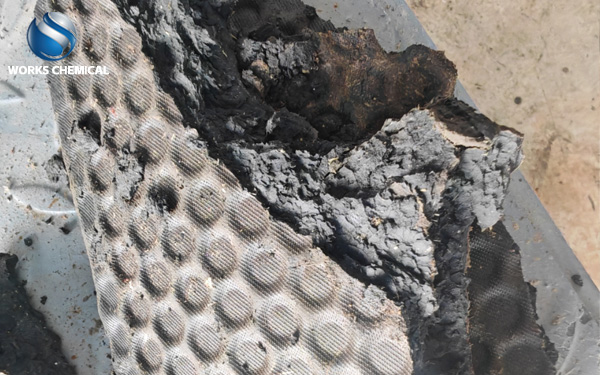
Facing this industry challenge, Works Chemical, leveraging its nearly ten years of frontline industry experience, independently developed a sludge enhancer. This product completely revolutionizes the traditional dewatering logic. It adopts a polymer composite technology and is specifically designed to tackle high-viscosity and high-water-content sludge. It can penetrate into the interior of municipal sludge, break the cell walls of microorganisms, convert the bound water that could not be squeezed out by mechanical pressure into free water, and achieve sludge-water separation through efficient flocculation and aggregation.
In the plate and frame filtration stage, the sludge enhancer demonstrated outstanding performance. It effectively unclogged the water-permeable channels blocked by highly viscous substances, significantly increasing the sludge input volume without the need for additional extension of the pressing time. The treated sludge cake has a thick thickness and a stable structure, achieving automatic detachment, eliminating filter cloth adhesion, and maintaining the moisture content at an extremely low level. Through this deep dehydration effect, the enterprise not only significantly reduced filter cloth wear and labor costs, but also reduced the volume and weight of the sludge at its source, resulting in a sharp decline in the previously high municipal sludge disposal costs.