

The organic matter content of high organic municipal sludge is mostly between 50% and 70%. It has the characteristics of strong colloid stability, high viscosity, high bound water content, and easily fragmented flocs. It is a typical difficult-to-dehydrate sludge. The conventional single coagulant has limited dehydrating effect, and there are common problems such as high moisture content in the sludge cake, turbid effluent, and high operating costs. This article briefly discusses the key points for selecting dehydrating agents for high organic sludge from a technical perspective, and introduces the practical application value of sludge enhancers.
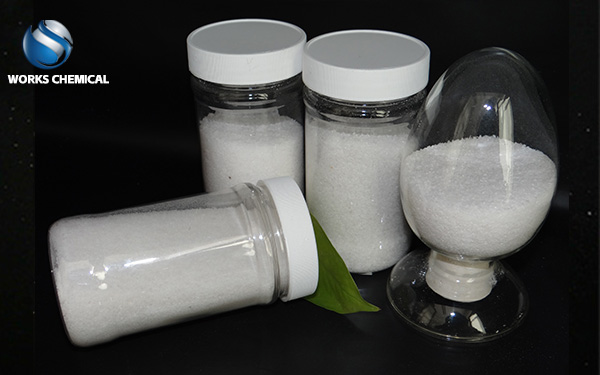
For high organic matter sludge, the selection of reagents must strictly follow the principles of charge matching, stable flocs, and equipment compatibility. This type of sludge has a strong negative charge on its surface, and only cationic polyacrylamide (CPAM) can be selected. The higher the organic matter and viscosity, the higher the ion degree of CPAM that can be adapted to, can effectively neutralize the charge and disrupt the stability of the colloid. At the same time, the equipment selection needs to be matched: plate and frame filter presses are suitable for medium and low molecular weight and medium ion degree models to ensure the flocs are dense and not collapsed; belt conveyors and centrifuges should choose high molecular weight and high ion degree models to enhance the floc's resistance to shear. All reagent selections must be determined through on-site small-scale tests to avoid problems such as loose flocs and charge reversal caused by empirical addition.
Using only a single CPAM can only achieve sludge agglomeration and flocculation, but it is unable to break the bound water encapsulated by extracellular polymers. There is a significant bottleneck in the deep dehydration effect. Combining with a dedicated sludge enhancer can effectively make up for the shortcomings of a single agent, achieving deep sludge conditioning, and is a key process combination for stabilizing and meeting standards for high organic matter sludge.
The composite sludge enhancer is suitable for various municipal sludges with high organic content. Its technical advantages are prominent: it can disrupt the hydrophilic structure of the sludge, reduce the viscosity of the system, and release the difficult-to-remove bound water; it forms a rigid framework, unclogs the water filtration channels, and prevents the sludge cake from collapsing and blocking pores during the pressing process; it reduces the total dosage of the reagents and avoids an increase in the sludge volume.
Compared with the traditional lime and iron salt conditioning methods, the use of this sludge enhancer has no corrosive effect on the equipment, does not reduce the calorific value of the sludge cake, and is suitable for the subsequent incineration and resource utilization of the sludge. After the compound use of the reagents, the moisture content of the sludge cake with high organic matter can be stably controlled within 60%, while reducing filter cloth blockage, extending the lifespan of consumables, and having significant comprehensive advantages in terms of dewatering effect, operating cost and environmental protection.