

During the process of sludge treatment and resource utilization, the deep dehydration effect of the plate and frame filter press directly affects the operating costs and environmental compliance of the enterprise. However, many enterprises often encounter problems such as "soft center" in the sludge cake (drier on the outside but wet on the inside), the sludge cake sticking to the filter cloth, and severe increase in sludge due to traditional inorganic chemicals in actual operation. To address these common industry challenges, Works Chemical Co., Ltd., as a solution provider specializing in plate and frame deep dehydration, has launched a sludge enhancer with multiple functions, bringing a systematic optimization solution to the sludge filtration process.
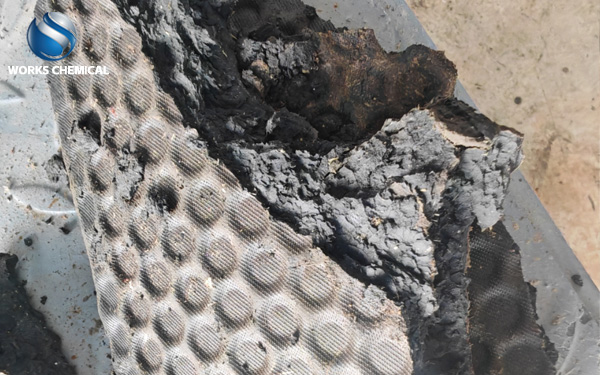
Break through the traditional bottlenecks and fundamentally solve the problems of "softness" and "sticky" fabrics.
The traditional dehydration processes mostly rely on inorganic conditioning agents such as lime and iron salts. These chemicals can only act on the surface of the sludge particles and cannot break down the microbial cell walls, resulting in the tightly locked intracellular water being trapped, forming a "soft core". At the same time, highly viscous sludge is prone to clogging the filter cloth, increasing the burden of manual cleaning and shortening the lifespan of the filter cloth. Works Chemical's sludge enhancer, as a new type of organic conditioning agent, can penetrate the interior of the sludge and effectively break down the cell walls and release the bound water. By reshaping the sludge floc structure, it becomes denser and has excellent water permeability, not only completely solving the "soft core" problem, but also significantly reducing the sludge viscosity, allowing the sludge cake to form well and not stick to the filter cloth, achieving easy and automatic detachment.
Multifaceted performance synergy helps enterprises reduce costs and increase efficiency
Unlike traditional agents with single functions, the sludge enhancer integrates the triple functions of flocculation, dehydration and conditioning. While achieving deep dehydration, this agent requires a small dosage and has low residue, avoiding the problem of increased sludge volume caused by excessive addition of inorganic salts. This not only significantly reduces the final moisture content of the sludge cake, but also reduces the total output of sludge at its source, directly cutting down the high subsequent transportation and disposal costs of the enterprise.