

In the operation ledger of industrial sludge deep dewatering, many managers often only focus on the purchase price of the chemicals, but overlook the much larger hidden costs - equipment maintenance and disposal expenses. Traditional dewatering processes, in pursuit of the solid content of the sludge cake, often require a large amount of inorganic conditioning agents such as lime and ferric chloride. Although this "big effort leads to miraculous results" approach can temporarily improve the dewatering effect, the problems of equipment corrosion and pipeline blockage it brings are persistent pain points in the enterprise's operation. In contrast, the new sludge efficiency enhancers eliminate lime and iron salts, fundamentally cutting off the chain of equipment wear and tear, and calculating a real "comprehensive economic account" for the enterprise.
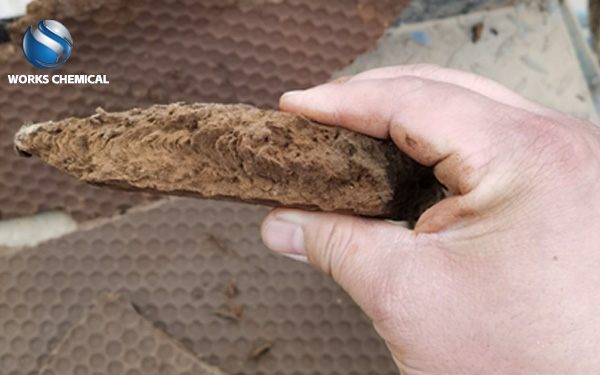
The main drawback of traditional inorganic chemicals lies in their strong corrosiveness and tendency to form scale. The strong alkalinity of lime combined with the oxidizing property of iron salts, under the high-pressure environment of the plate and frame filter press, will cause severe chemical corrosion to the filter plates, pipelines, pumps and valves, resulting in a significant reduction in equipment lifespan. What's more fatal is that these inorganic substances are prone to crystallization and deposition in the filter cloth fibers, causing the filter cloth to harden and the pores to be blocked. This not only leads to a sharp decline in dehydration efficiency but also forces enterprises to frequently replace expensive filter cloth components, increasing the time cost of equipment downtime and maintenance.
The new sludge enhancer completely avoids all the aforementioned risks. As an organic modified product without chloride ions and not relying on lime, it maintains a mild pH environment when performing the functions of breaking the wall, peeling, and surface modification. This "zero corrosion" characteristic means that the metal components of the filter press and the conveying pipelines are no longer subject to acid or alkaline erosion, and the depreciation rate of the equipment is significantly reduced. For the filter cloth, which is the most consumed component, since the agent does not contain inorganic salt precipitates, the filter cloth can remain in a loose and breathable state for a long time, and the cleaning cycle is significantly extended, with the service life often being several times longer than when using traditional agents.
From the perspective of overall cost, although the per-ton price of the new sludge enhancer may be higher than that of ordinary inorganic salts, its hidden benefits are enormous: the reduction in filter cloth replacement frequency, the decrease in equipment maintenance costs, and the reduction in downtime due to equipment failures all contribute to a significant cost advantage. Moreover, since no large amount of inorganic ash is introduced, the sludge reduction is more thorough, and the tonnage for subsequent incineration or off-site disposal also decreases accordingly. This full life-cycle cost control is the optimal solution for enterprises to achieve cost reduction and efficiency improvement.