

In the actual operation of industrial wastewater and municipal sludge treatment, the vast majority of enterprises have long relied on common dehydration agents such as ordinary polyacrylamide and polyaluminum chloride. They generally face the core problem of substandard dehydration results, which not only affects the efficiency of sludge disposal but also easily leads to environmental compliance risks. Many enterprises are puzzled: Although the conventional agents are inexpensive and widely used, why have they still been unable to solve the stubborn problem of sludge dehydration?
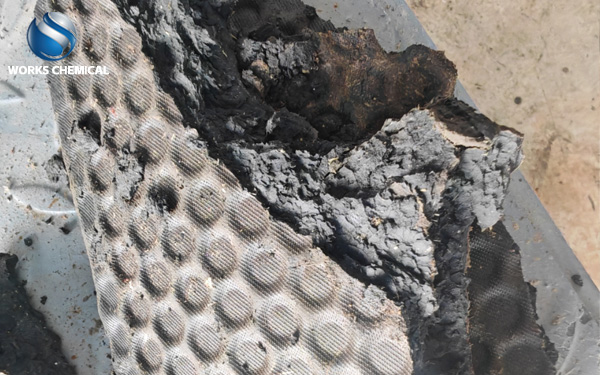
The core problems of common dehydration agents are quite prominent. Firstly, the dehydration depth is insufficient, and the moisture content of the sludge cake is relatively high. The conventional agents can only achieve simple flocculation and aggregation, but they cannot break the stable structure of the sludge colloid and are unable to release the internal bound water and capillary water of the sludge.
After plate and frame filtration, the moisture content of the sludge cake is mostly above 80%, the sludge cake is soft and thin, and there is a significant problem of soft center, which cannot meet the standards for solid waste disposal. Secondly, the separation of sludge and water is not thorough, and the filtrate contains a lot of impurities. The flocculated particles of the conventional agents are loose and unstable, and during the filtration process, they are prone to particle breakage and leakage of suspended solids, resulting in turbid filtrate. This not only cannot achieve water reuse but also easily leads to exceedance of the effluent standards, increasing the risk of environmental rectification. Thirdly, the adaptability is poor, and the treatment effect fluctuates greatly. For complex industrial sludges such as those from dyeing, pharmaceuticals, and electroplating, the conventional agents are greatly affected by the organic matter, pH value, and impurity components of the sludge, often experiencing flocculation failure and unstable dehydration. The treatment effect of batch processing is uneven. Fourthly, it is prone to clogging equipment and wearing out the filter cloth. The floccules formed by the conventional agents are fine and loose, which are very likely to clog the pores of the filter cloth, resulting in poor water permeability of the filtration equipment and frequent problems such as equipment blockage and decreased filtration efficiency.
Compared to ordinary dehydration agents, the sludge enhancer breaks through the traditional limitations in principle and specifically addresses various dehydration problems. As a modified polymer composite agent, its core advantage lies in the dual effects of breaking the cell wall and gel + modifying the framework, which is different from the single flocculation function of ordinary agents. The product can quickly destroy the negative charge stability of sludge colloids, disperse the dense structure of sludge, completely release the internal bound water, and simultaneously construct a stable water-permeable framework, making the separation of sludge and water more thorough. The actual measurement data shows that after treatment with the sludge enhancer, the moisture content of the sludge cake can be stably reduced to below 70%, and in high-quality batches, it can reach around 65%. The dehydration efficiency has been improved by more than 30% overall, completely solving problems such as soft core and excessive moisture in the sludge cake.
Meanwhile, the filtrate of this sludge enhancer is clear and has extremely low suspended matter content. It can be directly reused or discharged up to standard, avoiding environmental risks. Moreover, the product has extremely strong adaptability and is not affected by the type of sludge, water quality fluctuations, or pH value changes. It can achieve stable dewatering effects for various industrial sludges such as municipal sludge, dyeing, pharmaceuticals, and electroplating. The unique liquid skeleton structure ensures the permeability of the filter cloth, eliminates equipment blockage problems, significantly reduces the frequency of equipment shutdown for cleaning, and fundamentally addresses the shortcomings of traditional agents' performance.